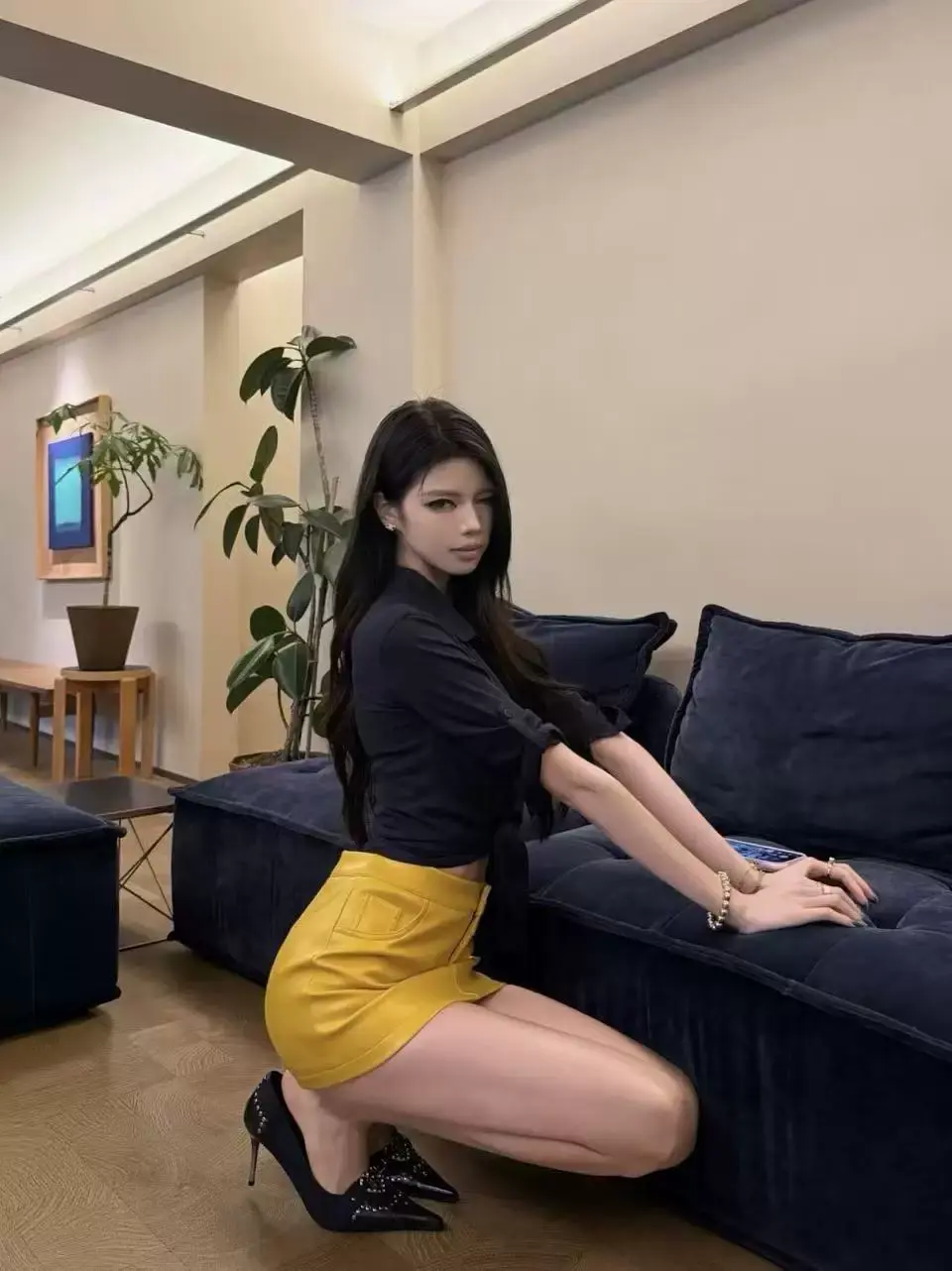
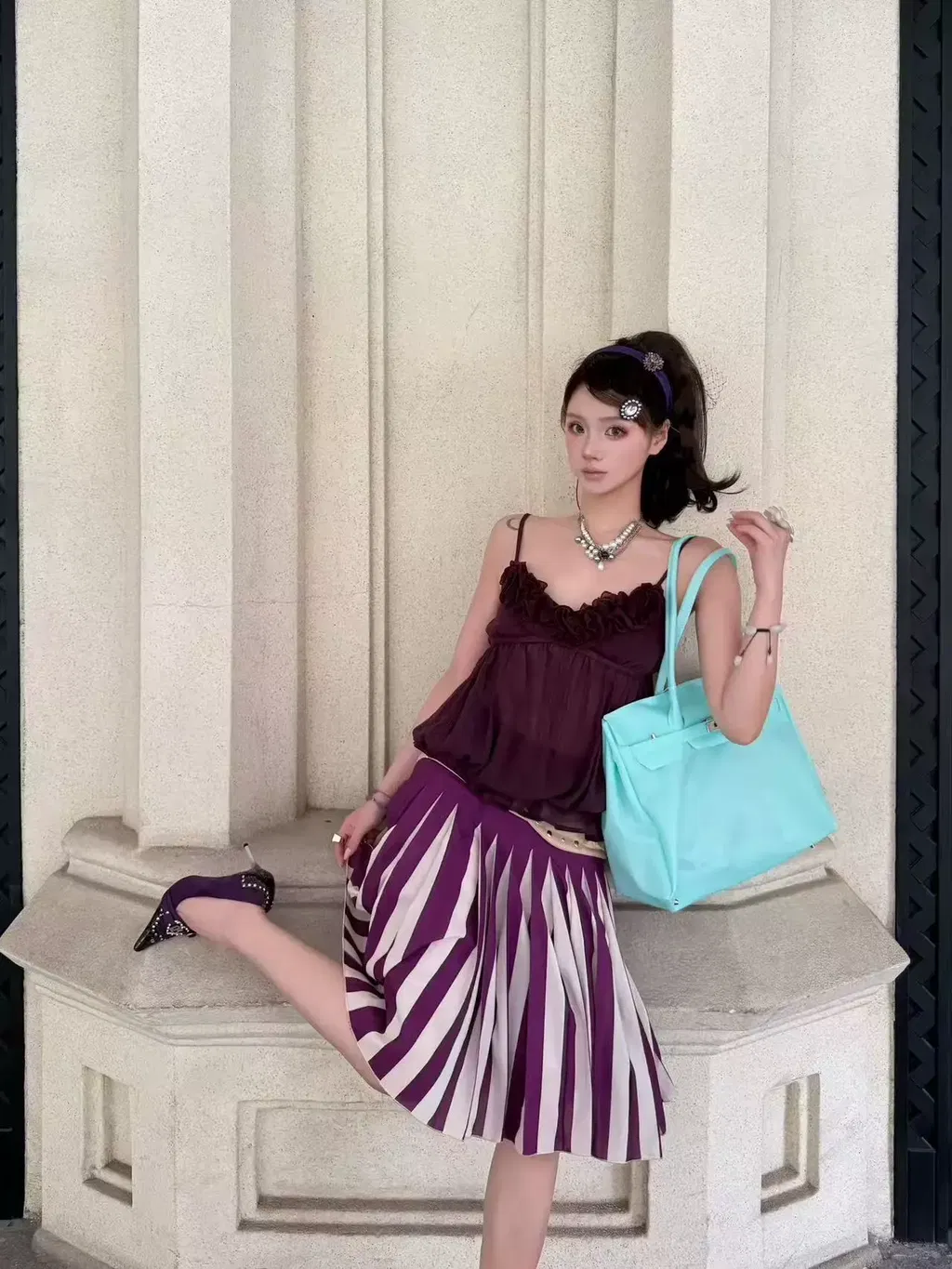
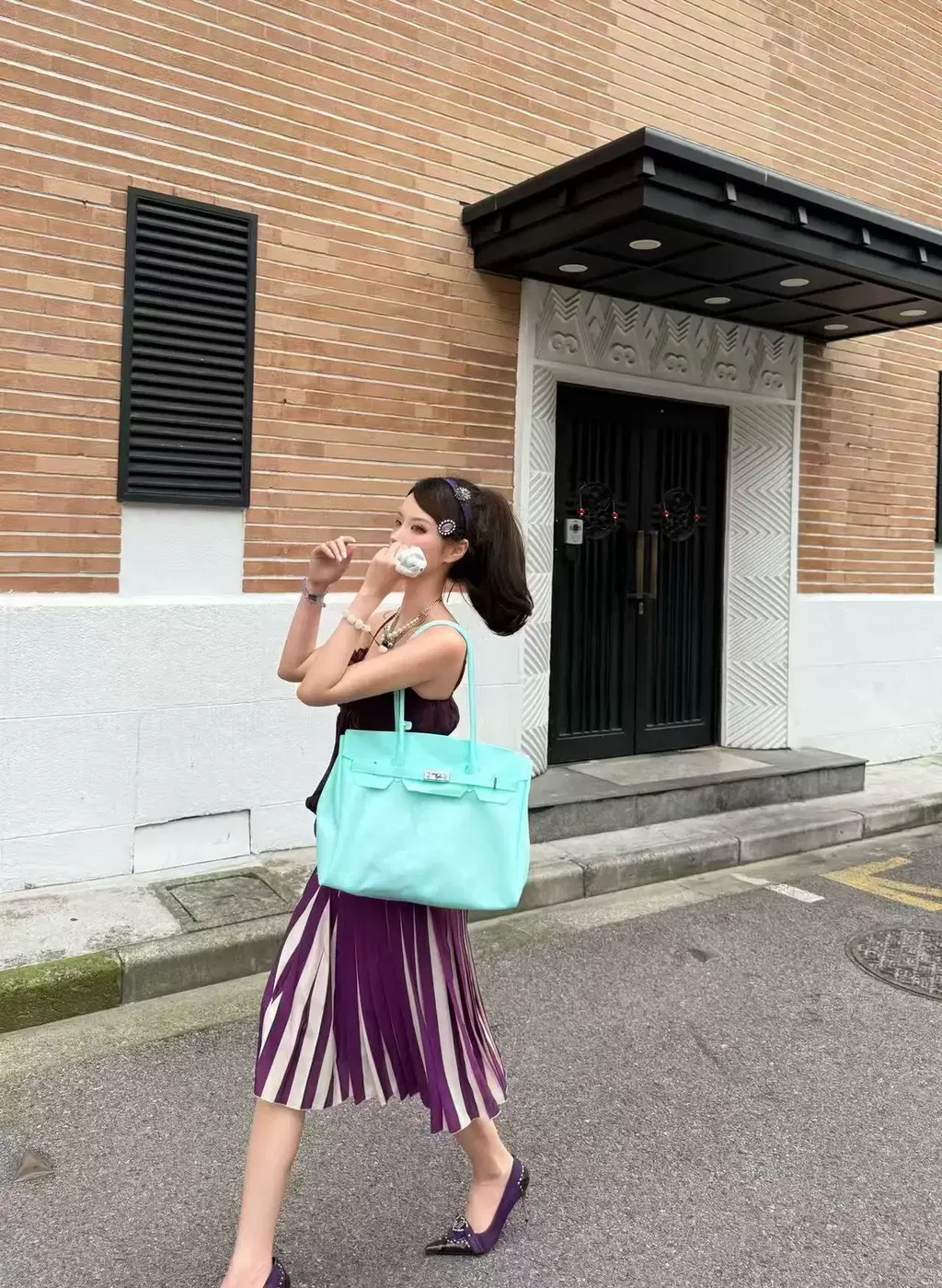
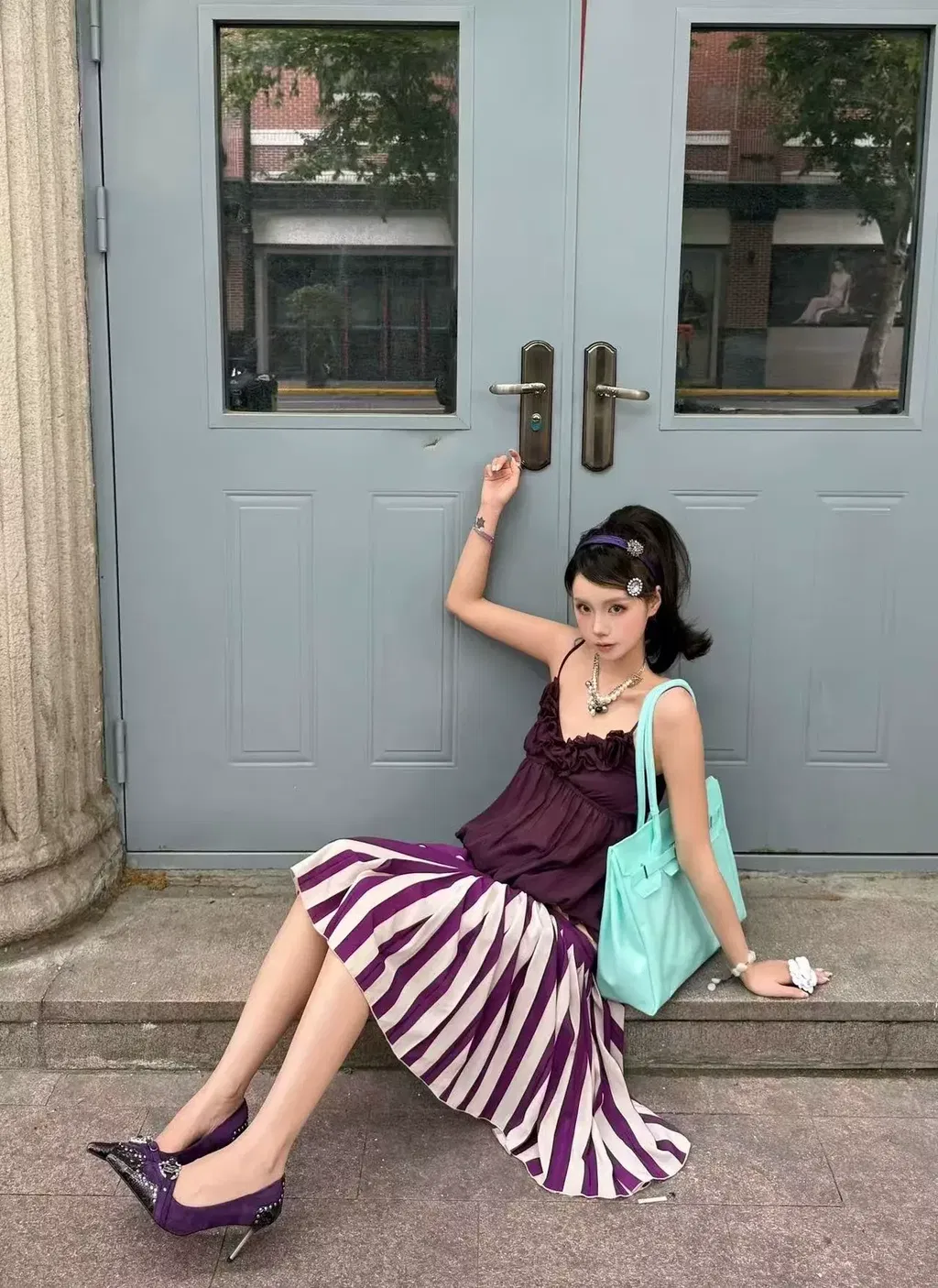
A slip skirt asks nothing of you. Wide trousers ask even less. The real decision in most outfits lives higher up — at the neckline that frames a collarbone, the shoulder seam that either sits flat or slides off on purpose, the panel of lace that turns a plain camisole into the reason you bothered getting dressed.
Chinese designer labels have quietly become the place to shop this logic. Tops built with the fussy, considered construction that used to belong to eveningwear — bias panels, a collar cut twice over, a shoulder that ignores the other shoulder — priced and sized for a Tuesday. Scroll the tops-for-women edit → and it reads less like a basics wall than a rack of small arguments, each one making a case for wearing very little else.
The camisole that refuses to just layer
The camisole earned its reputation as an underlayer, a thing worn beneath the thing you actually chose. Chinese design keeps undoing that. A lace-panel camisole puts the interest exactly where a blazer would hide it — a run of scalloped lace across the bust, straps thin enough to read as jewelry, a hem that skims rather than clings. Worn alone with denim it looks deliberate; worn under an open shirt the lace peeks out like a decision, not an accident. The trick is proportion. Keep the bottom half quiet — a straight trouser, a column skirt — and the top does all the talking.

A blouse with a strong opinion about shoulders
Tailoring is where these labels get genuinely confident. An asymmetric suit blouse takes the vocabulary of a men's shirt — crisp weave, a proper cuff, a collar that stands — and then breaks the symmetry on purpose. One shoulder sits where you expect; the other draws a diagonal, gathers, or bares itself entirely. It sounds like a stunt. On the body it does the opposite of a stunt: the off-kilter line lengthens the neck and throws the whole silhouette slightly forward, so you look caught mid-motion even standing still.
This is the top I'd buy first and build backward from. Tuck it into a high trouser and the asymmetry becomes the outfit's structure. Leave it loose over a slip and it turns architectural. Either way, no jacket required — the blouse already contains the tailoring.

The collar trick, done in one layer
Then there is the faux two-piece — a category Chinese designers treat as a genre rather than a gimmick. A polo collar and placket read as a shirt worn under a knit, except there is no second garment: it's a single top engineered to look layered. The payoff is real. You get the tidy line of a collar sitting above a crewneck without the bulk of two pieces fighting each other at the waist, and without the morning arithmetic of matching them. It photographs as effort and wears as one clean pull-over-the-head motion.
These do the most work in a wardrobe because they solve the hardest weather — the shoulder seasons, right now, when a coat is too much and a bare tee is too little. A faux two-piece polo under a light jacket looks considered; on its own it looks finished.

Slim knits, halter crops, and the case for shopping the top first
The rest of the category runs on the same conviction. Slim knit blouses — fine-gauge, ribbed, worn like a second skin — that make a plain trouser look expensive. Halter crops that bare the back and finish the shoulders in one line, so a summer outfit needs nothing added. Labels like aomalm → lean into this restraint: the top is spare, precisely cut, and left to carry the look alone.
The through-line is a refusal to treat the top as a base layer. Buy the interesting one, keep the rest quiet, and you've solved the outfit before you've thought about it. Start where the deciding happens — with the newest tops and blouses landing now →.