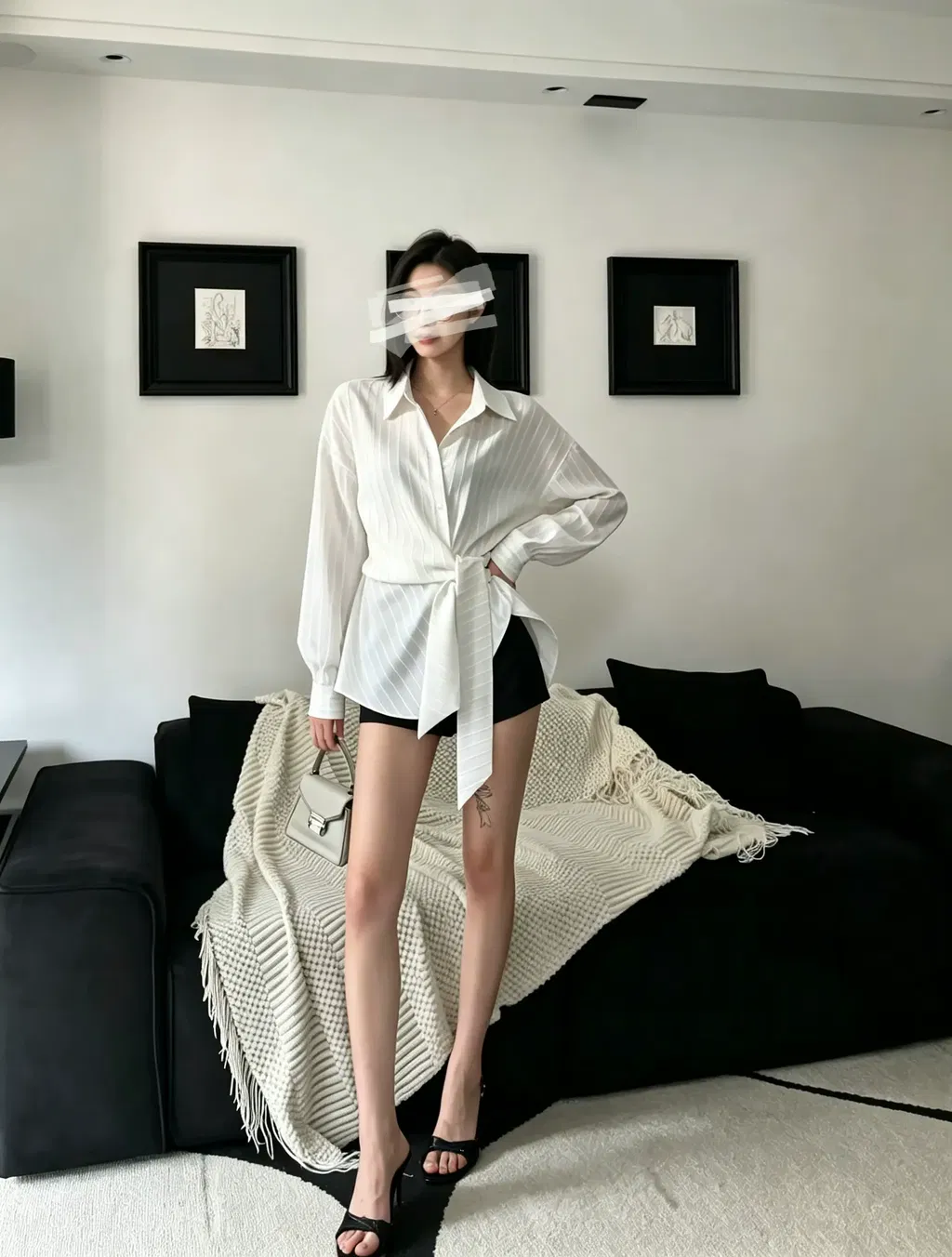
A faux fur belt can change a plain outfit more than a new top. It adds a band of texture, shifts the point where the eye stops, and can make familiar trousers or a dress feel different. The first decision is where you want it to sit. A belt at your natural waist and one resting lower on your hips need different lengths and create different proportions.
Measure over the clothing you intend to wear underneath. A belt bought for a thin dress may not have enough adjustment for a coat, while one chosen for low-rise jeans may be too long higher up. Treat the size as a usable fastening range, not simply the total length of the accessory laid flat.
Plush texture works without belt loops
NEVERMORE's Retro Faux-Fur Waist Belt has a plush finish and a pronounced retro mood. Its description allows for styling at the waist or hips, which makes the positioning decision particularly important. Over a simple dress, the belt becomes part of the silhouette. Over denim, it can echo the waistband or sit as a separate decorative line.
Decide whether you need the belt to hold clothing in place or simply decorate it. Those are different jobs. A broad plush accessory may not fit through your trouser loops, and that does not make it unusable as an outer layer. Check its width and fastening before planning an outfit around it. If the product information does not give a usable length range, ask for that measurement.

Chains and hardware add another set of proportions
JYOSEI's Black Fur-Trim Chain Ring Belt combines faux fur trim, a croc-embossed finish, mixed-metal studs, a geometric buckle, and detachable side chains. The hardware makes it a more visually active option. A plain knit dress or uncomplicated lower half gives those elements room, particularly if you want the chains to remain visible rather than disappear under a long top.
Try the belt while seated as well as standing. Notice where the buckle meets your body and where the chains fall against the garment. The detachable detail gives you an option to simplify the look, but inspect the attachment before removing anything. A practical styling test is to begin with the main belt, then add the chain detail and see whether the outfit still feels balanced.

A narrower strip of texture can be easier to repeat
NOLA's Gradient Faux-Fur Belt uses a subdued, shifting color rather than a strong solid contrast. It is an option to compare if you want texture that relates closely to a brown, gray, or neutral outfit. The product photograph shows how a smaller band can register at the waist without becoming the largest element in the look.
Keep the material language precise. A leather-like appearance or a fur-inspired color does not establish an animal-derived material. Read the composition for the selected product rather than drawing conclusions from the photograph. This is especially useful for accessories that combine several surfaces: the plush section, strap, backing, and hardware may all have different materials.

One belt can have several intended uses
VIA PITTI's Faux Fur Multi-Way Belt, pictured above, combines plush texture with PU straps and metallic hardware. The listing describes waist, scarf-style, and decorative layering uses. That makes it worth considering for someone who enjoys changing an accessory's position. Follow the stated wearing options and inspect the fastening rather than improvising from the name alone.
If you want it primarily over knitwear, try it with the knit's actual thickness. A gathered sweater can create more volume beneath a belt than a smooth dress. Loosening the fastening may look better than pulling the fabric tightly inward. The aim is a deliberate line in the outfit, with enough room to move and sit comfortably.
Build the outfit around one clear focal point
A textured belt can compete with a highly decorated bag, a large necklace, and a patterned top. Begin with the clothes you already own, then add accessories one at a time. Matching every metal or color is optional; what matters is whether you like the overall distribution of detail. Check the side and back views, since a belt changes more than the front photograph.
Explore accessories for different shapes, then compare the current new arrivals against your measurements. Choose the belt for its intended position and fastening first. Once that works, its texture can do the enjoyable part: giving a familiar outfit a different center of attention.