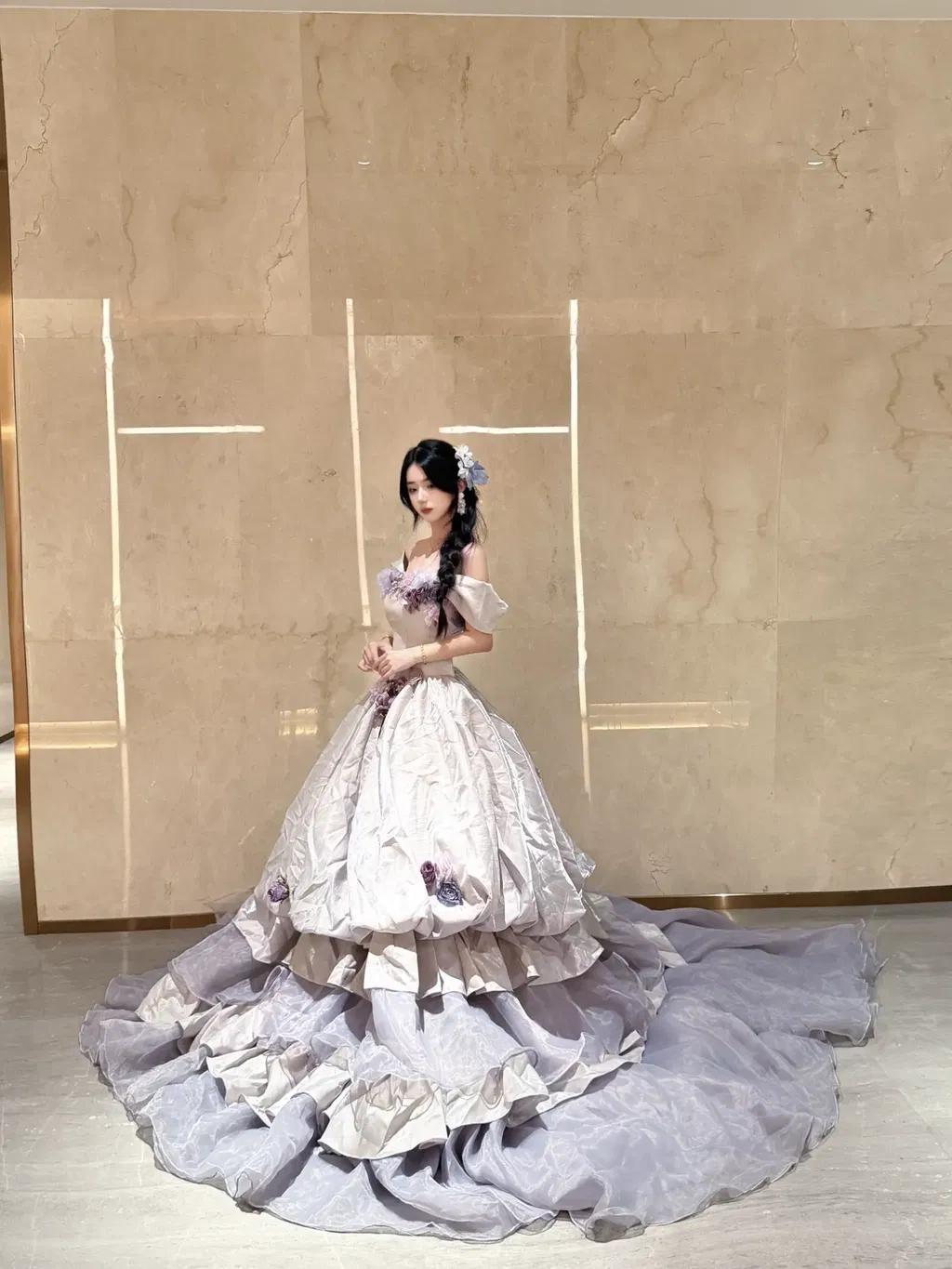
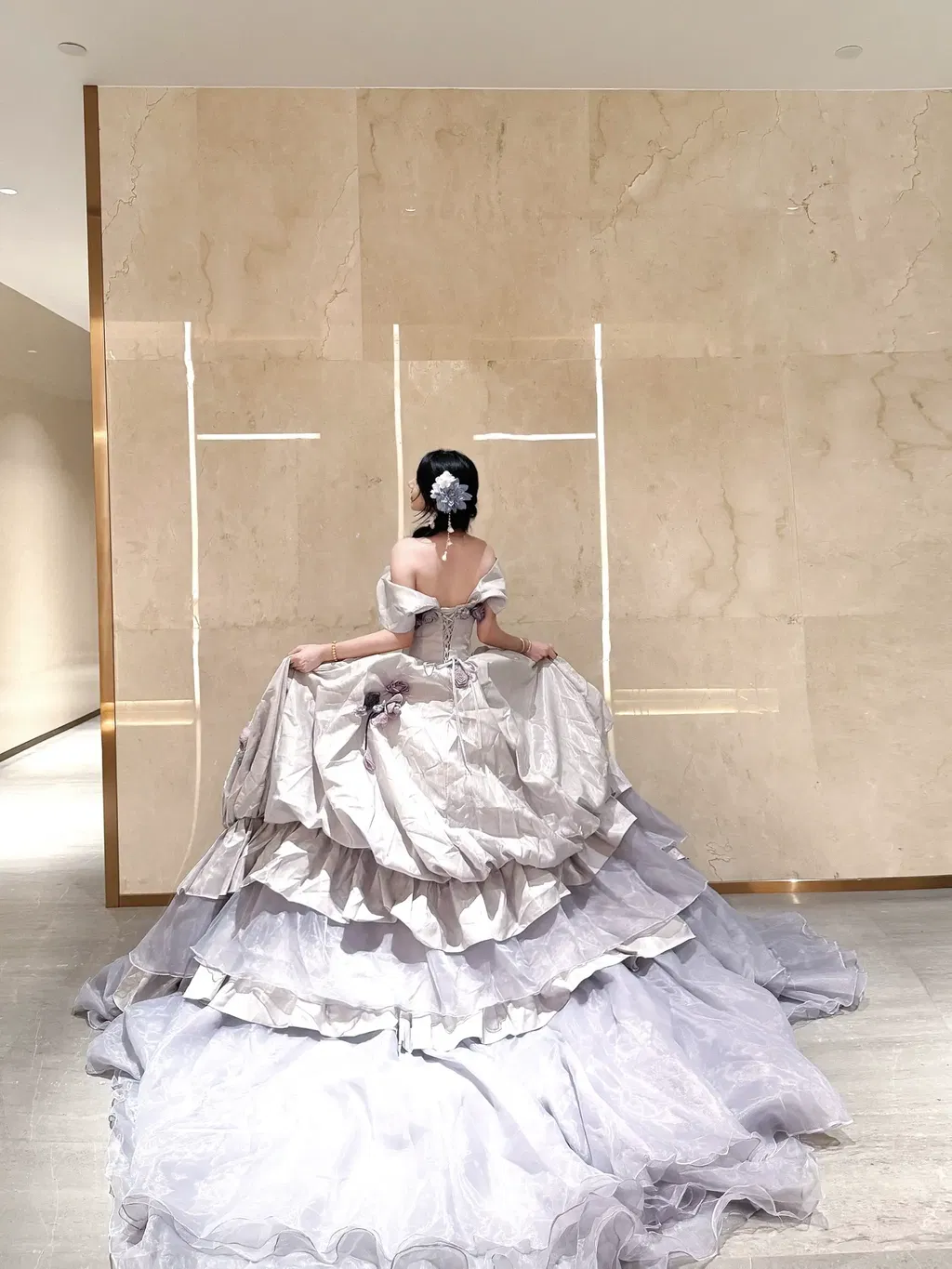
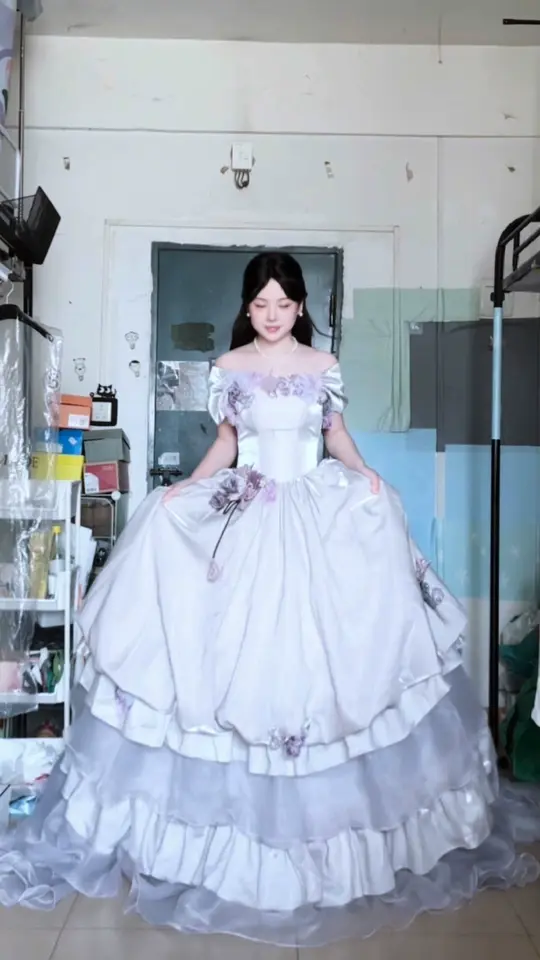
Waist-cinching describes a visual effect, not one universal dress construction. A tie, a belt, a shaped seam, or a change in fabric can all draw attention to the waist. Some dresses offer adjustment; others simply have a fitted cut. Identify which method creates the effect before choosing a size or assuming the waist can be tightened to suit you.
The Laura Lace Waist-Cinched Long Sleeve Dress from SHEER LUCK, pictured above, uses a defined silhouette with a full A-line hem and flared cuffs. The shape comes from the dress as a whole. Compare that approach with the tied, belted, and layered-looking examples below according to the fit you want and the clothes you enjoy wearing.
A waist tie creates an adjustable styling detail
SHEER LUCK's Odessa Waist-Tied Bubble Dress combines a tie with a short, voluminous bubble hem. The contrast between the tied area and the fuller skirt helps define the silhouette. It is a useful option to investigate if you want some control over the styling at the waist, but the tie does not make every other measurement irrelevant.
Check the bust, shoulders, and overall length as carefully as the waist. During a fitting, tie it comfortably and look at how the fabric gathers. If it pulls sharply elsewhere, tightening the tie will not solve the underlying fit. Also decide where you prefer the knot or bow to sit and whether it stays comfortable when you are seated at a table.

A belt can organize a longer dress
ASGONY's Belted Waist Checked Vest Dress pairs a checked vest-style upper with an A-line skirt, a belted waist, and a front bow detail. The longer silhouette gives the belt a different role from the tie on a bubble mini: it marks the division between the upper part and the flowing skirt. Inspect what is included with the product before planning to use the belt separately.
Try the dress with the shoes you expect to wear most often. The waist position and hem length work together, so moving the belt visually higher or lower can change the proportions. Use the intended belt placement as a starting point, then make only the adjustments the construction allows. A comfortable fit through the torso should remain the priority.

A layered effect may come from one garment
VIA PITTI's Faux Two-Piece Spliced Waist-Defining Pleated Dress creates a layered impression through plaid splicing and a fitted, pleated mini silhouette. The key purchasing distinction is faux two-piece: it is described as a dress with a combined effect, not a separately sized top and skirt. Make sure that is the kind of flexibility you want.
If your upper and lower halves usually need different sizes, examine both sets of measurements carefully. A single garment has to accommodate both. The visual division at the waist can suggest separates without providing their sizing freedom. If that does not suit you, actual tops and skirts may be a better route to a similar outfit than forcing a one-piece fit.

A fitted waist is not a body-shaping promise
Judge the garment's outline rather than expecting a dress to change your body. A full skirt can make the waist appear more defined by contrast; seams and color placement can direct attention there. None of those effects tells you how much pressure the garment applies or whether it offers support. Only use construction claims that the specific listing explains.
For a structured bodice, check the bust and torso length as well as the waist circumference. For a softer dress, inspect how the fabric falls when seated. A waistline that feels slightly misplaced can affect the entire look even when the size label seems right. Different dress patterns will suit different proportions, so compare the placement rather than treating one cut as universally flattering.
Make the fitting resemble your plans
Wear the underlayers and shoes you intend to use, then sit, walk, and lift your arms normally. Notice whether the waist detail stays in place and whether the hem gives you the movement you need. Avoid judging the dress only while holding a pose. The most useful fit is the one that remains comfortable once you stop thinking about it.
Explore dresses for the construction you prefer, or compare tops with skirts if separates would make sizing easier. Check new arrivals after deciding whether you want adjustment, structure, or simply a visible waistline. That turns a broad style phrase into a specific dress choice you can evaluate.