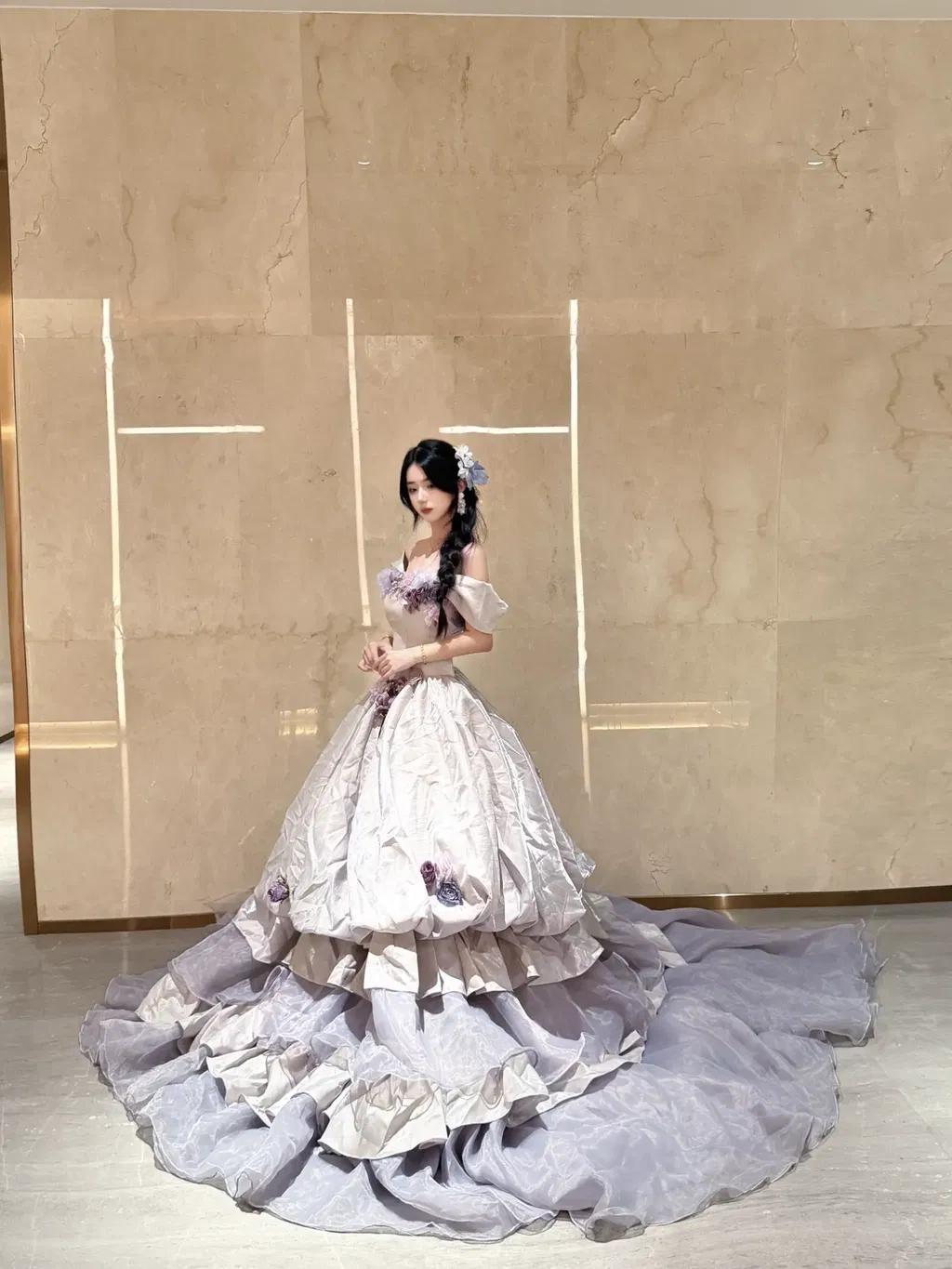
A satin dress catches the light before it tells you much about its construction. A glossy photograph cannot establish the fiber content, the lining, or how the fabric will behave when you sit down. Start by separating those questions. The surface may be what attracts you, but the composition and cut determine whether the dress fits the occasion you have in mind.
CottonWorks' textile glossary identifies satin as a weave and explains that its longer yarn floats create a smooth, shiny appearance. For shopping, the practical point is to read the fiber composition separately. A satin description alone should not be treated as proof that a dress is made from silk.
Drape and hem shape change how the shine reads
AGAM STUDIO's Blue Satin Lace Trim Dress has a satin sheen, lace at the neckline, and an asymmetrical draped hem. The changing hemline makes the lower half more active than a straight skirt. Compare it with the way you plan to move through the evening: a seated dinner, a walk between venues, and a dance floor put different demands on the same silhouette.
Look at the dress from the side and back, not only at the front drape. Check where the shortest part of the hem falls and whether the neckline works with your preferred underlayers. If the composition or lining is not clearly stated, ask for that information before deciding. The product's styling photograph cannot fill in a missing fabric specification.

A useful composition entry can be more detailed than the title
CYNR's Lace Backless Satin Dress is an example of why the detailed listing matters. Its composition identifies polyester and nylon components rather than establishing silk content. It also describes a detachable chiffon shawl and an open back. Treat each feature as a separate part of your choice: surface, lining, extra layer, and the amount of back coverage you want.
Check what is included with the selected option and inspect the back images before choosing underlayers. If you expect to wear the shawl for most of the event, try the dress with it in place. If you expect to remove it, assess the dress alone as well. The outfit should work in the version you will actually spend time wearing, not just in the most flattering product photograph.

Ruching changes the outline without answering the stretch question
SHEER LUCK's Ruched Beaded Satin Bodycon Dress combines a close silhouette with gathered fabric and bead detailing. Ruching introduces folds and texture into the surface, creating a different visual effect from a smooth, uninterrupted panel. It can be the reason you prefer a dress, but it does not establish how much the fabric stretches or how the fastening works.
Compare the bust, waist, and hip measurements for the selected size. Check the gathered areas while standing and sitting, and notice whether they fall as intended without pulling elsewhere. Avoid relying on a bodycon label to predict fit. The useful information is the actual cut and measurements, supported by the product's stated fabric and construction details.

A structured satin dress is a different proposition
The SHEER LUCK Satin Bow Detail Midi Dress pictured above uses a structured bodice, a bow at the chest, and an A-line skirt with a built-in mesh layer. Its shape is not the same as a loosely draped slip dress, even though both can have a satin finish. Decide whether you want volume and structure or a line that follows the body more closely.
For a structured dress, check how the bodice sits when you raise your arms and how the skirt behaves under a coat. For a more fluid design, pay attention to seams, underlayers, and the line through the hips. Neither construction is inherently better. The choice depends on the outline you like and the practical requirements of the event.
Finish the fitting in ordinary light
Look at the complete outfit in daylight and the indoor lighting you have available. Shiny surfaces can appear different as the light changes, so judge the selected color and coverage in more than one setting. Read the care label for the whole garment, including lace, beading, or detachable pieces, rather than applying one cleaning rule to everything described as satin.
Browse dresses and new arrivals with composition, lining, and silhouette as separate checks. Once those are right, the shine can be the enjoyable part of the choice. A dress should earn its place through the way it fits and works for you, as well as the way it catches the light.