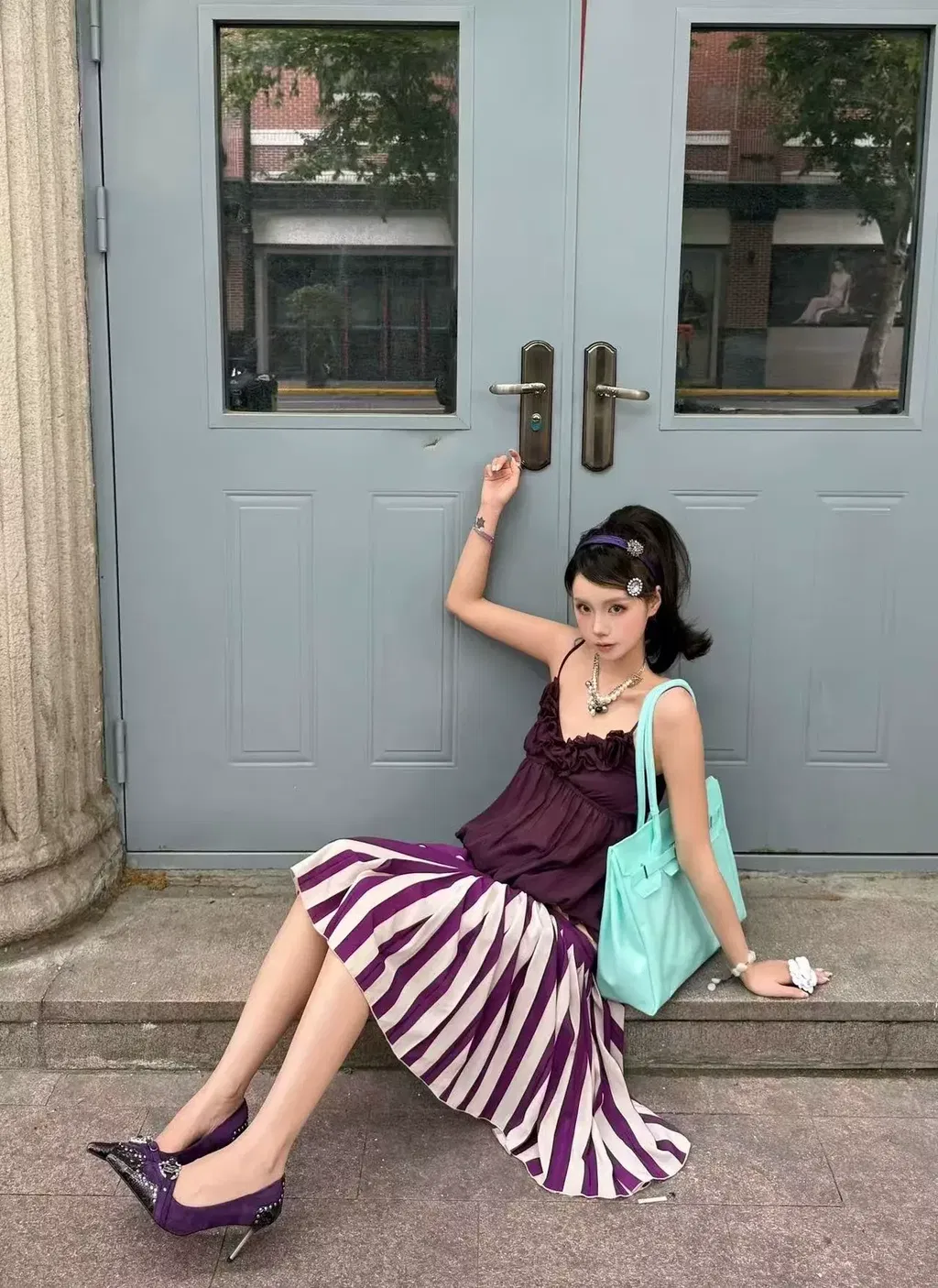
There's a specific stretch of minutes before a night out — heels on, cab two minutes away — when the dress has to carry the entire evening on its own. A going-out gown either takes that job seriously or it wastes your time.
The pieces here take it seriously. They're loud by design: strapless florals, a mesh corset laced to the sternum, rhinestones scattered on the diagonal. The move isn't to quiet them down. It's to figure out where the drama lives, then let everything else stay still.
Strapless, softened
A strapless gown lives or dies on the bodice. Get the structure wrong and it reads like a bridesmaid's afterthought; get it right and it does the posture work for you. The strapless pieces worth your night pair an engineered top with something that undercuts the formality — a full-scale floral that behaves more like a painting than a print, or a single oversized bow at the bust that turns the whole thing faintly theatrical. That bow is the joke and the point at once: it tells the room you know exactly how much drama you're wearing.
Both sit at the evening end of our dresses edit →, and both work the same way — they concentrate the event at the neckline and let the skirt fall quiet.

The corset, worn as architecture
Corsetry is having its moment for a reason: it's the rare trend that flatters by construction rather than by luck. An off-shoulder mesh corset gown puts the seaming on display — boning you can trace with a finger, sheer panels that read as skin from across a room. This is drama you feel structurally, cinched at the ribs, held upright. It's also where sheerness earns its keep; the mesh reveals in outline, not in full, which is the difference between provocative and exposed.
If bare architecture is the mood, the sheer-luck rail → is built around exactly this — mesh, lace, and the see-through-in-theory pieces that always keep something back.

Rhinestones, cut on the bias
A cowl neck is the quietest way to be flashy. It drapes instead of clings, catches light in the fold, and moves when you do. Put rhinestones on an asymmetrical, one-shoulder line and the gown stops needing jewelry entirely — the dress is the jewelry. The bias cut matters more than the crystals here: it's what makes the fabric pour rather than sit, so the shine travels as you cross a room instead of staying put on your chest.
Labels like cynr → trade in this kind of considered shine — sparkle with a cut behind it, never sparkle for its own sake.

The slip's quiet argument
Not every going-out dress needs to shout. A spaghetti-strap slip gown is the counter-argument — bias satin, a bare shoulder, nothing else. It's the piece you reach for when the venue is the drama and you'd rather be the calm center of it. Worn with the strap sitting slightly loose and hair pushed off the face, a slip reads more expensive than most gowns twice its complexity. Restraint photographs well; it always has.
How to wear high drama without the costume
One rule holds all of this together: pick a single loud element and make everything else defer to it. Rhinestone cowl neck? Skip the earrings, wear a bare lobe. Mesh corset? Cover the legs — a long, lean skirt keeps the sheerness deliberate. Full floral strapless? Undone hair and a flat sandal, so the gown never tips into prom.
Skin is a budget, not a target. If the top is bare, keep the leg covered; if there's a slit, close up the neckline. Costume happens when everything competes at once — bare shoulders and a thigh slit and crystals and a statement heel, all shouting over each other. The editing is the whole skill.
And resist the matching shoe. A gown this decided wants footwear that gets out of the way — a plain black sandal, a bare mule — not a dyed-to-match satin pump doing a second job the dress already handled on its own.
The drama pieces move fast, because there's rarely more than one of each in a given size. See what just landed in new arrivals → and claim the gown before the night you need it for.