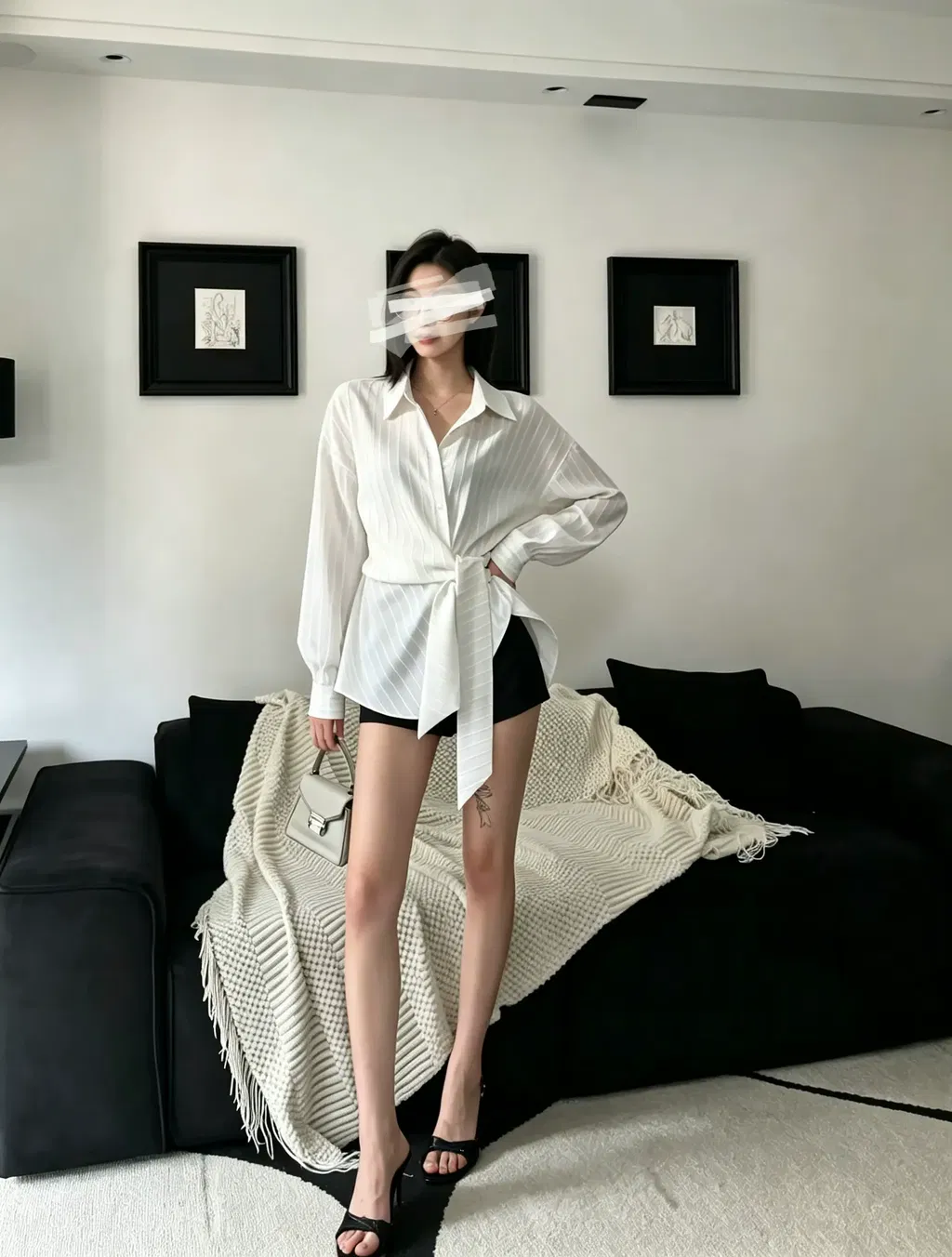
You typed "asian clothing website" into a search bar, and the results all look alike: a model in a cropped jacket, a price, a buy button. Here is how to tell those stores apart in about five minutes. A disclosure first: CHINASQUAD is one of those stores. We sell pieces from independent Chinese designer labels, so weigh what follows with that in mind. Every check below works on any site, ours included, and if we fail one, you should notice.
1. Does the store tell you who made it?
A listing that says "Asian style" and nothing else is selling a look, not a garment. A named label gives you something to search, a body of work to compare and, most usefully, a reference point for fit. Once you find a label whose shoulders and waist suit you, its next piece is usually less of a gamble than a stranger's.
Here is what a label-forward listing tells you. The Tailored Slim Fit Jacket is credited to 1JINN STUDIO, and its description is specific about the cut: a fitted waist, a tailored three-dimensional shape, a slim fit and a medium length. It names the cloth as a crisp twill trench fabric, gives a composition line of polyester, lyocell and cotton, and states that it was designed and made in China. The options show it sits alongside a matching skirt and top in black or khaki, sized S to L, with pre-order variants labeled separately from in-stock ones. More of the label's work is in the 1JINN STUDIO collection.
2. Are sizes given in centimeters?
Letter sizes do not travel well. Many Chinese labels cut smaller than US sizing, so a medium from one designer may sit closer to what you think of as a small. What you want are actual measurements in centimeters: bust, waist, hip, shoulder, length. Then do the step most shoppers skip. Take a garment you own that fits the way you like, lay it flat, measure it, and compare those numbers to the listing. Our Chinese clothing size guide walks through how to measure, and the method applies wherever you shop.
Also check whether length is treated as its own choice. The SRYS AME Relaxed Wide-Leg Tailored Trousers, for example, come in long, regular and short versions across XS to L, which matters far more to a petite or very tall shopper than the letter on the tag. The rest of the label's tailoring is in the SRYS AME collection.

3. Is the fabric composition listed?
"Soft," "premium" and "high quality" are not fibers. A good listing names what the garment is made of, because composition tells you how it will drape, stretch, crease and wash before it ever reaches your door. If the description is all mood and no material, ask the store or move on.
The AOMALM Draped Cowl Double-Layer Top shows why it matters. Its description explains the construction plainly: a false two-piece, with a knitted outer layer fixed over a built-in bandeau, a draped cowl neckline, a cinched side waist and a short silhouette that raises the waistline. The composition line names lyocell and spandex, which tells you to expect a fluid knit with some give rather than a stiff, structured blouse. It is offered as a top or as a dress version in black, sized S to L. See more from the label in the AOMALM collection.

4. Do the photos and the words agree?
Photos sell, but they can also mislead. Look for more than one angle, close views of texture and seams, and hardware you can actually see. Then cross-check the images against the text. If the description says one color and the photo reads as another, or the same image turns up under several different shop names, treat that as a reason to slow down.
The BUM STUDIO Lace Panel Layered Top is a useful case. On a screen, a dark garment can read as black; the description settles it as a deep navy. It also spells out the structure, a fitted camisole paired with a coordinating long-sleeve cover-up, sold as separate options (the lace vest or the long sleeve) from XS to L. And the composition is broken down by part: the shell lists acrylic, cotton, rayon and spandex, while the straps list rayon and spandex. The label's wider range is in the BUM STUDIO collection.

5. Can you find shipping, duties and returns before you pay?
Cross-border orders live or die on the fine print. Before you reach checkout, find the store's actual policy page, not a one-line FAQ answer, and read it. Who pays import duties? How do returns work, and what is excluded? What condition must an item be in? If you cannot find those answers within a couple of clicks, that is your answer. Ours is on our returns and exchanges page; read it there rather than taking a blog post's word for it. For the broader question of trust, we also wrote about whether it is safe to buy clothes from China.
The five-minute version
Named label, centimeter measurements, fabric composition, photos that match the words, and a policy page you can find before paying. A store that passes all five is giving you enough to make a real decision; one that fails two or more is asking you to guess. Run the checklist on us too. If you would like a place to start, browse our new arrivals and see how the listings hold up.